Luxury Travel Slovenia: The Europe Trip Your Friends Have Not Taken Yet

Here is the problem with a lot of European summers right now. The famous places are packed. Venice is capping day-trippers, Florence is asking crowds to spread out, and the Amalfi Coast in August is a traffic jam with a view. You wanted to slow down and instead you are shuffling through a line. If that is the version of Europe you are trying to avoid, there is a smarter move, and it is one almost nobody at your dinner table has made. This is a guide to luxury travel Slovenia, the small country that has all the ingredients for a great trip and almost none of the crowds.
Slovenia sits right between Italy, Austria and Croatia. It borrows a little from each and somehow stays under the radar. It has an Adriatic coastline with a Venetian town on it. It has the Julian Alps and a lake with a church on its own tiny island. And it has a 13th-century castle turned five-star hotel sitting on an island in the middle of a river, with only 16 rooms. While the rest of southern Europe strains under more visitors than it wants, Slovenia is quietly glad you came.
The Short Version
Luxury travel Slovenia is the best-value under-the-radar trip in Europe right now. It is central, uncrowded, and packs an Adriatic coast, the Alps, and a genuinely rare castle hotel into a country you can see in a week. Fly business class on points you likely already have, roughly 160,000 round trip from the East Coast, then pay cash for the hotels since the best ones cannot be booked with points anyway. Book the flight on points, book the hotel through an advisor, and you get a trip that feels expensive for a fraction of what it looks like.
Why Slovenia, and why now
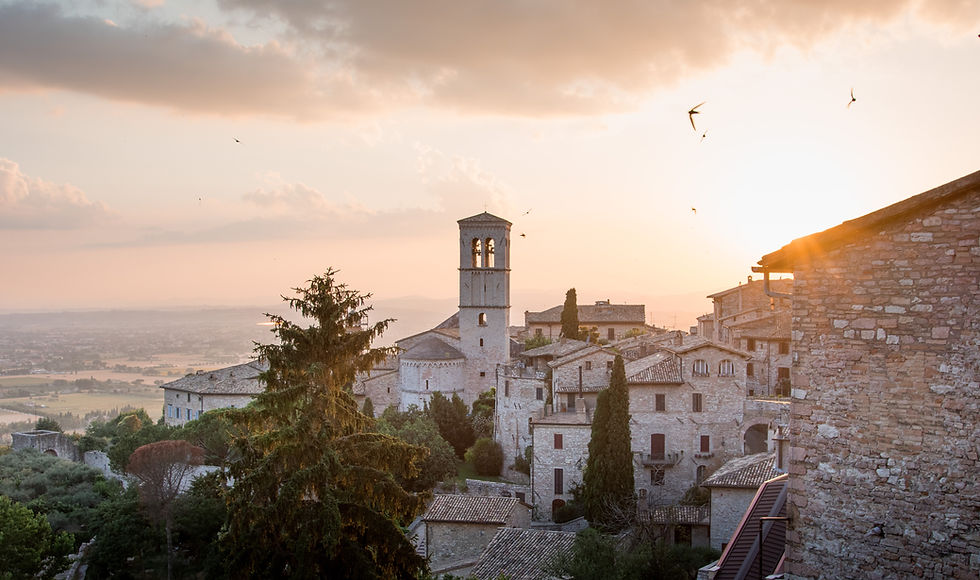
The honest case for Slovenia is not that it is undiscovered. It is that it is unhurried. For a country most people cannot quite place on a map, it packs in an absurd amount, and it does it without a crowd. You can stand on an Adriatic beach in the morning and be in the Alps by afternoon. The capital, Ljubljana, is a walkable, cafe-lined city that wins over people who do not usually like cities. The coast has Piran, a medieval Venetian town stacked onto a spit of land jutting into the sea, with a bell tower you can climb for a view across the water to Italy.
The timing is the other half of it. Europeans have been rerouting away from the crowded corners for a few years now, and the numbers are not subtle. According to a widely cited travel industry report, summer bookings to Slovenia jumped more than 400 percent year over year as travelers steered away from the hottest, most packed parts of the map. Slovenia is the rare European escape that still feels genuinely uncrowded and actively wants more visitors. It is the right time to go somewhere happy to have you.
This is a trip for someone who has done the famous places and wants somewhere that still feels like a discovery, without giving up a single comfort to get it.
The castle you can actually sleep in
If you build the trip around one thing, build it around Grad Otočec. It is the only water castle in Slovenia, a 13th-century fortress restored and sitting on its own small island in the middle of the emerald Krka River, reached by a bridge, ringed by centuries-old trees and the sound of moving water. It is a Relais and Châteaux property, a collection that does not hand out membership lightly, and it recently earned a Michelin Key, the guide's new mark for exceptional hotels. It is one of only five hotels in the entire country to hold one.
It is genuinely tiny. Around 16 rooms and suites, done in solid walnut, wrought iron and stone, Gothic and Renaissance bones with modern comfort worked in quietly. Reviews describe breakfast brought to your room, homemade bread and fresh coffee, and dinner in a courtyard behind the castle walls where the kitchen pulls much of the plate from the castle's own garden. There is a private tasting you can do up in one of the towers. Around the island, the Krka is clear enough to swim or fly-fish, and the banks are made for slow walks.
One honest note, because a review with no caveats is just an ad. This is a small castle, not a sprawling resort, and that is the whole point of it. The spa and heated thermal pool are a short walk away at the sister hotel rather than on the island itself. If you need a buzzing scene, this is not it. If you want to disappear into somewhere singular, there is almost nothing like it in Europe.
Grad Otočec is the reason to plan the whole trip, and it is the kind of place points cannot get you, which matters more than it sounds.
The palace on the Adriatic
For the second half, swing to the coast for a completely different feeling. The Kempinski Palace Portorož is a century-old belle-époque grande dame right on the Slovenian Adriatic, all ornate balconies and sea views, set in a heritage-protected park a minute from the water. It is the kind of old-world palace hotel that hosted film stars in its heyday, and one of its restaurants is named for Sophia Loren, who stayed here in the 1950s.
It is the grander, more social counterpoint to the castle. A private beach in summer, a big seawater-pool spa, several restaurants, and the medieval town of Piran a short drive away. Where Otočec is intimate and hidden, this is polished and expansive. It trades some of the castle's seclusion for range and a beachfront, which is exactly what you want in the back half of a trip once you have already unwound.
Two hotels, two completely different moods, and together they show you the full range of a country most people never see at all.
How you actually get there on points
Here is where most Slovenia guides stop short, and where the real value is. Everyone will tell you the country is beautiful. Almost nobody tells you how to fly there in a lie-flat business class seat using points you are probably already sitting on. So let me, because I ran this exact search.
There are no nonstop flights from the US to Ljubljana, so you connect through a European hub either way. That is not a problem. It is an opportunity, and it is the part that makes this trip special. Here is the routing I found.
Out, you fly Boston to Ljubljana in a lie-flat business seat through Frankfurt on Lufthansa, for about 88,000 points and roughly $50 in taxes. If you hold Chase Sapphire points, you can book this through United, which is a Chase transfer partner, meaning you move your Chase points to United at a one-to-one ratio and book the Lufthansa seat with them. If you hold Amex points instead, you can transfer to a partner like Air Canada Aeroplan and price out a similar routing. Both currencies get you there. You almost certainly have one of them.
Coming home is the clever part. Instead of flying straight back, you hop from Ljubljana to Zurich for just 12,500 points, spend a full day and night in the city, then take the nonstop SWISS flight from Zurich to Boston in business for about 60,000 points and $158. That second leg is lie-flat the whole way home, and the Zurich stop costs you almost nothing to add. You turn one trip into two.
All in, about 160,000 points round trip for two business class seats worth of flying that would run several thousand dollars in cash, plus a day in Switzerland as a bonus. That is a genuinely good redemption, not just a fine one.
If you want to find seats like these yourself, an award search tool does the heavy lifting. I ran this search using Roame, which scans dozens of airline programs at once and shows you where the business class award space actually is, instead of you guessing which program to check. If you decide to try it, use code BROADREACH at checkout for the best available discount. And if you would rather not learn a new tool at all, that is what the next section is for.
Let me find your version of this flight
You do not have to become a points person to travel like one. If you have points sitting unused and no plan for them, reach out through the trip inquiry page and tell me roughly how many points you have and in what program, plus where you usually fly out of. I will tell you straight whether this trip works with what you are holding, or find the version that does.
Booking the hotels: where luxury travel Slovenia is not a points play
A quick word on the hotels, because this is where a lot of points advice steers you wrong. People assume the goal is to book everything with points. For hotels like these, that is a mistake. Grad Otočec cannot be booked with points at all, and hotel points at this tier are generally poor value even when they are an option. A stay like this is a cash booking either way.
So the smart move is not to hunt for a points redemption that does not exist. It is to book the same cash rate through a travel advisor and get more for it. As a Fora travel advisor, I can book these properties at the exact rate you would find booking direct, and the booking comes with advisor perks the hotel extends to guests booked this way. Depending on the property and availability, that can mean upgrades, credits, and breakfast, plus things like early check-in, late check-out, and a welcome amenity. Same price, subject to availability, with someone looking after you while you are there.
Points win on the flight. An advisor wins on the hotel. Do both and the trip costs you far less than it looks, with more care than booking it yourself.
If this were my trip
Here is how I would build it. Split the week, and start inland. Three or four nights at Grad Otočec first, out on the castle island, where the whole point is to slow all the way down. The courtyard dinner, a wine tasting up in a tower, a walk along the Krka, nothing on the schedule. It is the more special of the two hotels, so I would give it the fresh, unhurried front half of the week.
Then move to the coast for the back half at the Kempinski, where a beach and a big spa are exactly what you want once you have wound down. Break up the drive with a day in Ljubljana, which is small enough to see in an afternoon and charming enough to be glad you did.
One thing I would not do is try to add Lake Bled as an overnight. It is stunning, and it is the postcard image of Slovenia, which is exactly why it is the one genuinely busy spot in the country. Keep it as a half-day trip and spend your nights in the quieter places. That is the whole spirit of this trip.
The one mistake I would avoid: booking the award flights too close together. Those are separate tickets, so leave real time between the Ljubljana flight and the Zurich leg. Hours, not minutes. That buffer is exactly why the full day in the city is the right call rather than a tight connection. If the first flight slips, you want room, not a scramble.
The verdict
Book it. Sleeping in a castle built in the 1200s is a rare thing, the country is beautiful and refreshingly uncrowded, and the Zurich stopover turns an already strong redemption into two trips in one. Done this way, luxury travel Slovenia is about as close as you will get to somewhere in Europe that still feels undiscovered while asking you to give up nothing in comfort. Fly there on points, stay through an advisor, and you have a trip that feels far more expensive than it is.
Frequently asked questions
How many points do you need to fly business class to Slovenia?
Roughly 160,000 points round trip from the US East Coast for a lie-flat business class seat, based on a search I ran for a Boston to Ljubljana routing with a Zurich stop on the way home. That covers about 88,000 points out through Frankfurt on Lufthansa, a 12,500-point hop to Zurich, and about 60,000 points home nonstop on SWISS. You can book these with Chase or Amex points transferred to the right airline partner.
Is Slovenia a good alternative to Italy for summer travel?
Yes. Slovenia borders Italy and shares a lot of what people love about it, an Adriatic coast, Venetian architecture, and great food, but with a fraction of the crowds. As Italy's marquee cities push back against overtourism, Slovenia has become one of the strongest under-the-radar alternatives in Europe, and it is easy to reach from the same hubs.
Can you book Slovenia's castle hotel with points?
No. Grad Otočec, the 13th-century castle hotel on the Krka River, is an independent Relais and Châteaux property and cannot be booked with hotel points. It is a cash booking. The better move is to book the same cash rate through a travel advisor, which can add perks like upgrades, credits, and breakfast at no extra cost, subject to availability.
What is the best time of year to visit Slovenia?
Late spring through early fall, roughly May to September, is the sweet spot for both the coast and the Alps. Even in peak summer, Slovenia stays far less crowded than neighboring Italy or Croatia, so you get good weather without the crush. The shoulder months of May, June, and September are especially comfortable.
How long should you spend in Slovenia?
Six to seven nights is ideal, plus a day in Zurich on the way home if you route your flights that way. That gives you three or four nights inland at the castle and the back half on the Adriatic coast, with a day in Ljubljana to break up the drive. The country is small enough to see comprehensively in a week.
This post contains affiliate links. If you sign up or purchase through my links, I may earn a small commission at no extra cost to you. I only recommend tools I genuinely use and trust.

Comments