Get in Touch
I would love to help you create your dream vacation!
Frequently Asked Questions
Is Japan expensive?
Less than it used to be due to the yen exchange rate. Luxury hotels remain expensive but food, transport, and daily costs are very reasonable compared to Western Europe.
How do I get around Japan?
The shinkansen (bullet train) handles most intercity travel. Within Kyoto, taxis and the subway work well. A IC card like Suica covers trains, subways, and many convenience stores.
What is a ryokan and is it worth it?
A ryokan is a traditional Japanese inn with tatami rooms, communal or private baths, and multi-course kaiseki meals. One night at a good ryokan is one of the most distinctly Japanese experiences available to travellers.
Should I visit Kyoto or Tokyo on my first Japan trip?
Both. Tokyo for energy and scale, Kyoto for culture and beauty. Most itineraries do a few nights in each. If you can only do one, Kyoto.
5-Day Itinerary
This route splits four nights in Kyoto with a day trip or overnight in Kanazawa. The shinkansen connection makes the move easy and the contrast between the two cities is worth it.
Day 2
Kyoto
Where to stay:
Four Seasons or Aman Kyoto
What to do:
Fushimi Inari at dawn, Nishiki Market, dinner in Pontocho alley
Day 1
Kyoto arrival
Where to stay:
Four Seasons Kyoto
What to do:
Fly into Osaka KIX, shinkansen to Kyoto, evening walk through Gion
Day 3
Arashiyama
Where to stay:
Ryokan in Higashiyama
What to do:
Morning bamboo grove, Tenryu-ji garden, check in to the ryokan, kaiseki dinner
Day 4
Kanazawa
Where to stay:
Kanazawa or return Kyoto
What to do:
Shinkansen north, Kenroku-en garden, Higashi Chaya, Omicho seafood market
Day 5
Kyoto to Osaka
Where to stay:
Depart from Osaka
What to do:
Final morning at Philosopher's Path, transfer to Osaka, evening international departure
Want the Full Version?
This itinerary gives you the shape of the trip. The hotel bookings, restaurant reservations, private guides, and transfer logistics are where the difference is made. Reach out and we will put it together for you.

Don't Miss!
One night in a traditional ryokan in Kyoto's Higashiyama district. Yukata robes, tatami floors, a multi-course kaiseki dinner served in your room, a hinoki wood bath. The entire structure of the stay is different from any Western hotel. It is the most Japanese experience available without leaving the city, and it changes how you read everything else you see.
Top Attractions
What to See and Do
Fushimi Inari Taisha: ten thousand vermillion torii gates climbing a wooded mountain south of Kyoto. Arrive before 6:30am to have the lower trails almost to yourself. The full summit hike takes two hours.
Kanazawa's Higashi Chaya district: a preserved geisha quarter of wooden teahouses that has barely changed in two centuries. The gold leaf workshops and traditional craft shops are the real reason to come.
Arashiyama bamboo grove: the famous section lasts about three minutes. Walk past it and continue into the smaller trails behind toward Jojakko-ji temple. That is where Kyoto opens up.


Booking through a Fora-affiliated advisor unlocks perks that are not available at the standard rate. No extra cost to you.
01
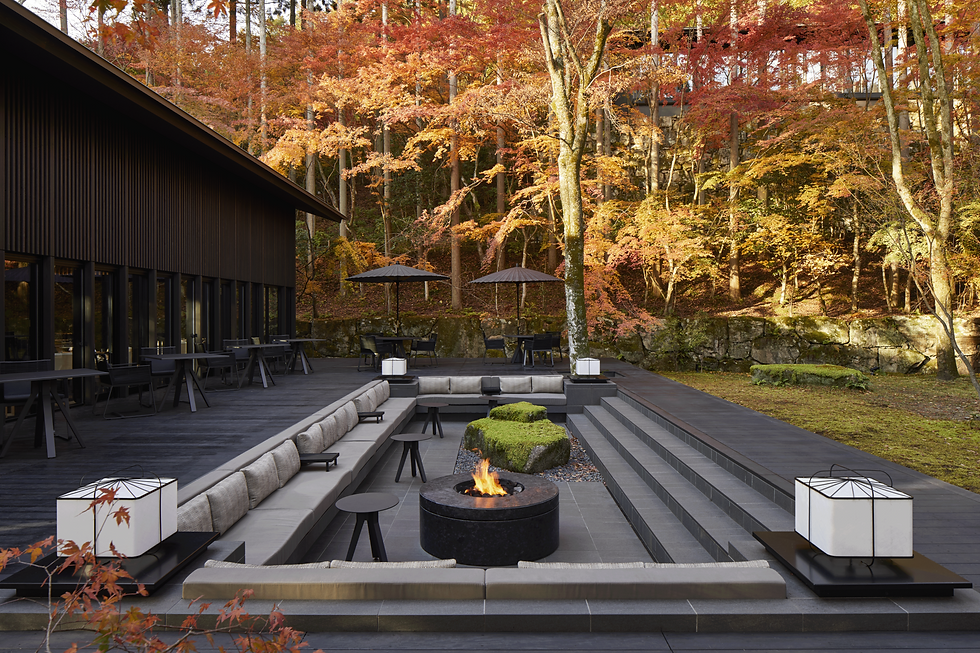
Aman Kyoto
Hidden at the edge of a protected forest in northern Kyoto, Aman's Japanese property is built around a private garden that most of the city does not know exists. The quietest possible way to experience Kyoto.
Fora Perks:
Breakfast daily
guaranteed upgrade
resort credit
private garden access
guided temple walks
02
Four Seasons Kyoto
A contemporary luxury hotel built around an 800-year-old pond garden in the Higashiyama district, walking distance from the city's most important temples. Exceptional service and one of Kyoto's best restaurants.
Fora Perks:
Breakfast daily
$100 hotel credit
upgrade on arrival
in-room amenity
03
Hyatt Regency Kyoto
A well-positioned full-service hotel in the southern Higashiyama district, close to Sanjusangendo and the National Museum. A reliable, comfortable base at a more accessible price point than the Aman or Four Seasons.
Fora Perks:
Breakfast daily
room upgrade
early check-in/late check-out
welcome amenity
Luxury Hotels
Where to Stay
Japan: Kyoto and Kanazawa
The Japan Most Visitors Miss
Tokyo gets the headlines but Kyoto and Kanazawa are where Japan makes the most sense. Kyoto is the former imperial capital: fifteen hundred temples, preserved geisha districts, and a food culture that is considered serious even by Japanese standards. Kanazawa, two hours north by shinkansen, is the city that avoided the World War II bombing campaigns that levelled most of Japan's urban centres. It kept its castle, its samurai and geisha districts, and its seafood market. Between them, these two cities offer a version of Japan that moves at a pace you can actually absorb.

When to go
Best time to visit
Peak Season
Late March to early April (cherry blossom) and November (autumn foliage). Both are genuinely spectacular and genuinely crowded.
Sweet Spot
May, June, or October. Good weather, manageable crowds, and every attraction fully open.
January and February are cold but very quiet. The ryokans are peaceful and the temples are nearly empty.